How to set up a landing spot for things you take out every day
· Editorial team bostonnewsemma.com
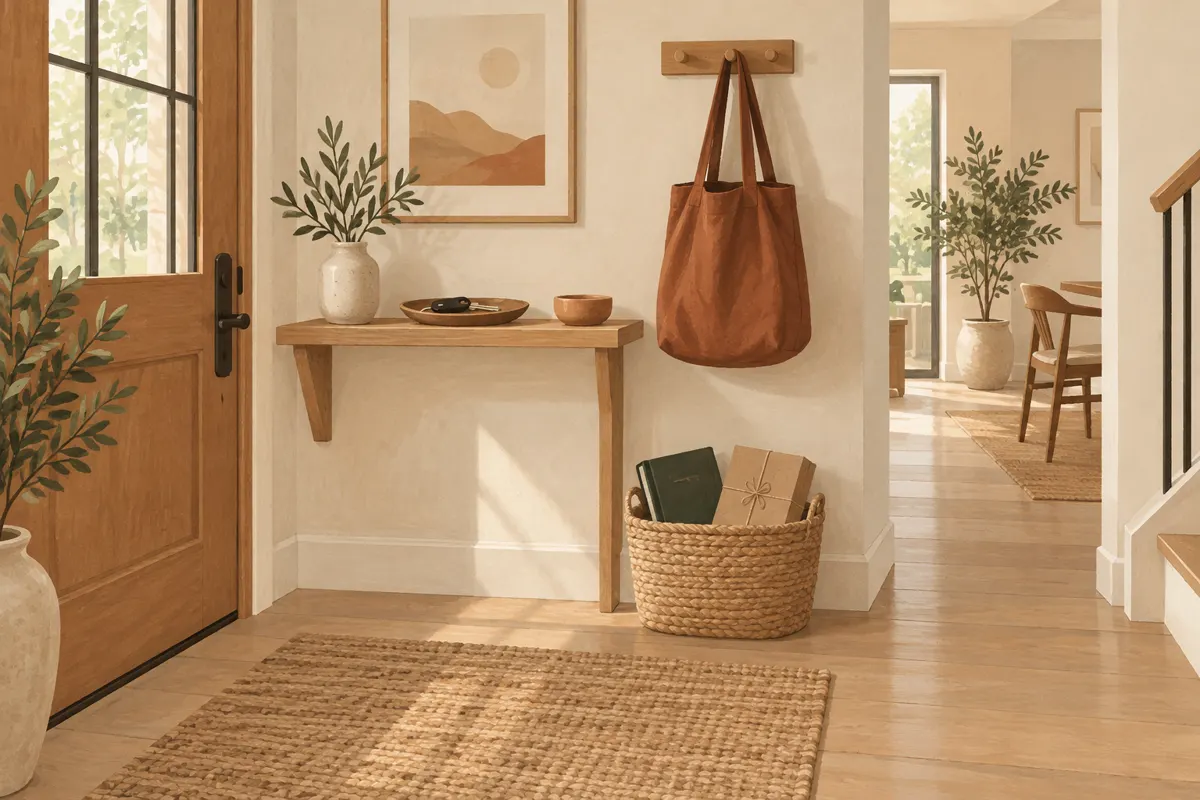
Set up a landing spot near the door you actually use: give keys a small tray or hook, give your everyday bag a place beside it, and keep outgoing items in one separate container. Start with what you already own. The proposed setup below keeps daily essentials together while leaving enough room to open the door and walk through comfortably.
Choose a spot along your usual route
Look at where you naturally put things when you come home. If your keys end up on the kitchen counter because you enter through the kitchen, a shelf by the front door may be inconvenient. Choose a place you pass when arriving and leaving, even if it sits just beyond the entryway.
Before arranging anything, open the door fully and walk past the proposed spot while carrying your usual bag. Check that a hanging strap, basket, or shelf will not catch the door or narrow the walkway. In a tight space, use an existing surface or a suitable wall hook instead of adding furniture.
Decide what belongs there
Empty your everyday bag and pockets onto a clear surface. Separate what you take out regularly from receipts, spare accessories, and things carried for one particular outing. The landing spot only needs to hold items that help you get out the door.
- Daily essentials: keys, your everyday bag, and any access card you routinely carry.
- Next-trip items: a library book, a prepared return package, or something borrowed that you need to give back.
- Items stored elsewhere: old mail, backup supplies, occasional bags, and paperwork that needs attention.
If your wallet stays in a zipped bag pocket, keep that arrangement. There is no need to unpack everything each evening. Give each item one consistent home, whether that is in the bag or on the landing spot.
Give keys and bags separate places
A practical proposal is a shallow tray for small essentials and a hook or dedicated space for the bag. Keep the tray visible and easy to reach. Avoid stacking papers over it or choosing a deep container where keys disappear beneath other objects.
- Put your keys in the tray or on their hook as soon as you arrive.
- Place your bag beside the tray or hang it from a hook rated for its loaded weight.
- Keep frequently used small items in a consistent bag pocket or a separate part of the tray.
- For a shared entryway, assign each person a distinct hook or tray space.
A key organizer is optional. These holders group keys into a compact arrangement, but key lengths and car fobs may require different attachments. If you want one, check compatibility with the keys you actually carry. A familiar key ring can still have a reliable home in your tray.
Make a small outgoing area
Keep return items separate from daily essentials. One small basket or reusable tote beside your bag is a useful proposed arrangement. Put items there when they are ready to leave: package a return first, gather all parts of a borrowed item, or place a library book where you can see it.
Before leaving, check whether anything in the outgoing area matches your trip. If a bulky package blocks the walkway, store it elsewhere and leave a short reminder beside your keys. Avoid turning this space into a holding area for decisions; unopened mail and unfinished tasks need another home.
Keep the setup easy to reset
Use a short arrival routine: keys down, bag in place, loose receipts out. Before your next departure, return any missing essentials to the bag and check the outgoing container. Keep the routine simple enough to follow when your hands are full.
After using the setup for several days, adjust whatever feels awkward. Move a tray that requires a detour, reconsider a hook if you keep setting the bag on the floor, and remove objects that never leave the house. When the surface fills up, clear misplaced items before adding more storage. The landing spot should make the next departure easier, with everything reachable in one stop.