How to pack a reusable lunch kit that is easy to clean
· Editorial team bostonnewsemma.com
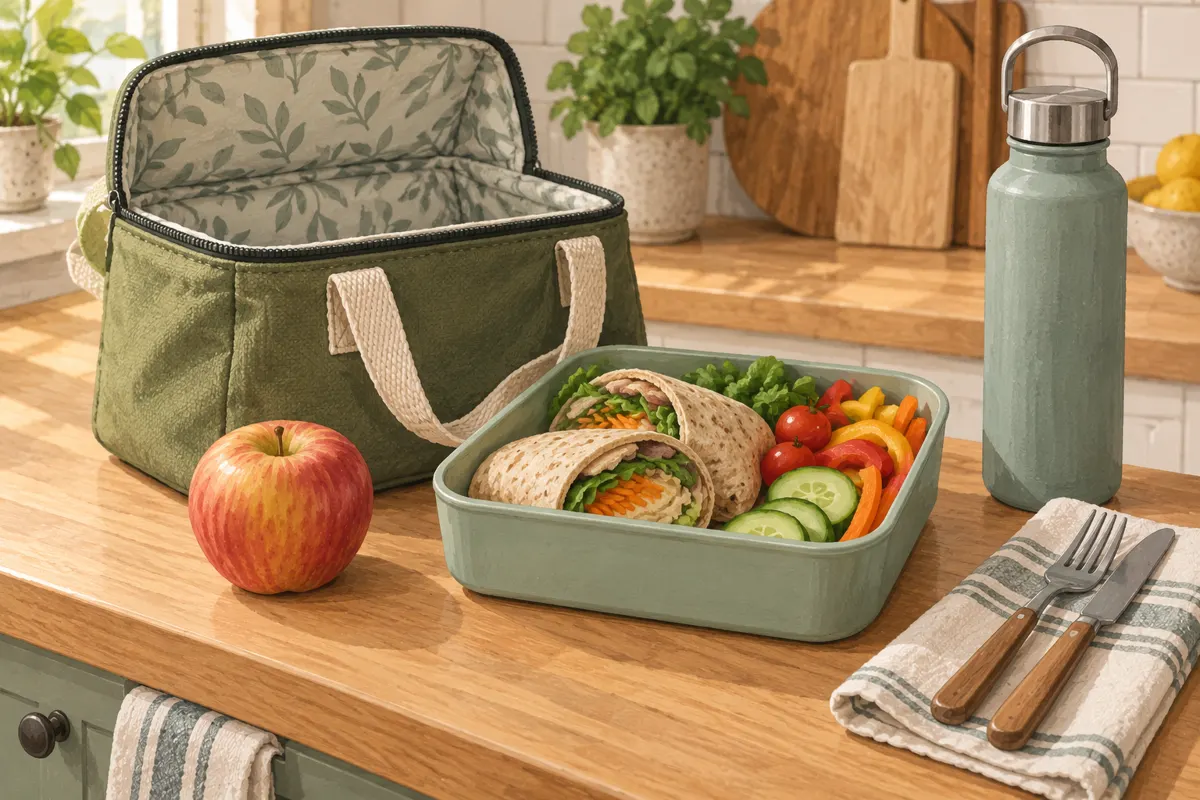
Pack a reusable lunch kit with a food container you can wash easily, ordinary cutlery, a cloth napkin, a refillable water bottle, and a bag you already own. Keep the number of pieces small, give wet foods a secure container, and unpack everything when you get home. The practical goal is less disposable packaging and a kit you can comfortably clean for the next day.
Start with what is already in your kitchen
Before buying a matching lunch set, check your cupboard for food containers with intact lids. Choose a size that fits your usual lunch without forcing you to carry several small boxes. For easier cleanup, our proposal is to favor containers whose corners, lids, and removable parts you can reach with your usual brush or sponge.
- One main container for a sandwich, pasta salad, or another meal.
- One small, securely closing container if you need dressing or a dip.
- A fork or spoon from your kitchen drawer.
- A washable cloth napkin and a refillable water bottle.
- An existing lunch bag or suitable carry bag.
Glass jars can be useful for adults, but consider their weight and the possibility of breakage. Avoid them for young children and check school or workplace rules before packing one. You do not need to replace a serviceable container just to make the kit look coordinated.
Choose food that needs fewer separate packages
Plan the food before choosing the containers. Sandwiches, wraps, pasta salad, chopped vegetables, and fruit are options you can portion at home. A loose menu also makes it easier to shop for what you need and prepare some ingredients ahead of time.
Our proposal is to build lunch around one main dish and one side. For example, put a wrap in the main box and carry an apple alongside it, or pack pasta salad with vegetables mixed in. Add a separate dip only when you actually want it. Each extra container should earn its place in the bag.
Reducing lunch waste does not require making every ingredient from scratch. Start by replacing the disposable wrapping used during packing, then consider which individually packaged foods you could conveniently portion from a larger supply.
Pack wet foods securely and keep utensils together
Use a container intended for liquids when packing dressing or other runny foods; a lid that closes is not necessarily leakproof. Follow the container’s instructions and check that its seal is seated correctly. Keep crunchy ingredients separate from dressing if you want to mix them at lunchtime.
- Fill the main container, leaving enough space for the lid to close without pressing food into its edges.
- Close any small sauce container and place it upright in the bag.
- Wrap clean cutlery in the cloth napkin so it stays together.
- Fill and close the water bottle, then check every lid before leaving.
- Use refrigeration or suitable cold storage for foods that need it; reusable packaging does not replace temperature control.
Make unpacking part of arriving home
Our proposed routine starts as soon as the bag comes home. Put the containers beside the sink, remove the cutlery, and take out the napkin. Empty food scraps into the appropriate waste or compost collection, following what your compost system accepts.
- Scrape out remaining food and separate lids from containers.
- Remove seals or other parts only as directed by the manufacturer.
- Wash containers, lids, cutlery, and the bottle according to their care instructions.
- Check lid grooves and bottle openings for food residue.
- Let all parts dry fully before reassembling and storing them.
Check the bag for spills and clean it according to its care label. Put a soiled napkin in the laundry and set out a clean replacement. Leaving the bag open while it dries makes the next packing session easier.
Adjust the kit to your daily routine
After using the kit, notice what creates extra work. If you repeatedly bring home an unused spoon, leave it out. If a complicated lid is awkward to wash, try a simpler container you already own. If one box holds the whole meal comfortably, retire the unnecessary extras.
Our proposal is to keep the clean kit together in one cupboard spot, with lids beside their containers. Prepare suitable ingredients ahead when convenient, and choose tomorrow’s lunch while putting the kit away. A manageable packing and washing routine gives reusable items a clear place in everyday life.